ISS commander Chris Hadfield, everybody's favorite Canadian Astronaut, explains how to vomit in space.
You're welcome.
BTW, Hadfield is described as being the most social-media savvy astronaut ever, which explains why he has been appearing all over the place on TV and the Internet. We could learn a lot from him in church land about how to make a complex and esoteric subject fun and even entertaining to a wide audience.
Showing posts with label technology. Show all posts
Showing posts with label technology. Show all posts
Monday, April 29, 2013


Tuesday, March 5, 2013
#CHSOCM
One of the best ways to learn about Church and Social Media is to use Social Media to engage in conversations about Church and Social Media. There lots of people to follow on Twitter, Facebook, and other channels who share practical tips and inspire with examples of their work. There are also certain hash tags that are useful to keep tabs on. "Hash Tags" are those little bits of texts that start with a # key. People use them on Twitter to "tag" a tweet as belonging to certain subject. This is very useful, as it gives you a way to look up a subject and see what others are saying about, even if they aren't people you normally "follow."
One such hashtag is #CHSOCM which stands for "Church and Social Media." I can create a link that just searches for that term like this. Now that link is generated dynamically, meaning that what appeared when I wrote it just now is different what will appear when you click on it. And ten minutes later it might be different as more and more people add to the #CHSOCM tweets. Indeed, as I write this there are lots of tweets being added to that hashtag because there is a "Chat" happening right now that is using that hashtag.
That is, there are about two dozen or more people currently talking about Church and Social Media, as they do every Tuesday night at 9PM EST. This discussion is moderated, meaning that someone volunteers to lead the discussion with structured questions. Usually they announce the subject ahead of time, and sometimes even suggest people read certain things in order to discuss them. After the chat is over (which takes about an hour), the transcript is later uploaded as a kind of archive.
The nice thing about a chat like this is that it's somewhere between a phone call and an e-mail. Things are written down so you can always go back, but it's also very immediate and conversational. Topics ebb and flow as people make suggestions, share observations, and generally do the sort of things people do when talking.
Another thing I appreciate is that one can have one window open on their computer with the chat running, and use another for a task like creating blog posts!
One such hashtag is #CHSOCM which stands for "Church and Social Media." I can create a link that just searches for that term like this. Now that link is generated dynamically, meaning that what appeared when I wrote it just now is different what will appear when you click on it. And ten minutes later it might be different as more and more people add to the #CHSOCM tweets. Indeed, as I write this there are lots of tweets being added to that hashtag because there is a "Chat" happening right now that is using that hashtag.
That is, there are about two dozen or more people currently talking about Church and Social Media, as they do every Tuesday night at 9PM EST. This discussion is moderated, meaning that someone volunteers to lead the discussion with structured questions. Usually they announce the subject ahead of time, and sometimes even suggest people read certain things in order to discuss them. After the chat is over (which takes about an hour), the transcript is later uploaded as a kind of archive.
The nice thing about a chat like this is that it's somewhere between a phone call and an e-mail. Things are written down so you can always go back, but it's also very immediate and conversational. Topics ebb and flow as people make suggestions, share observations, and generally do the sort of things people do when talking.
Another thing I appreciate is that one can have one window open on their computer with the chat running, and use another for a task like creating blog posts!
Sunday, February 24, 2013
The Messiah Website Relaunch
The last few weeks have been a time of heightened productivity for me. Lent has always been a good time for me to knock through a bunch of projects, and part of that comes the place it occupies in the church year: things have settled in after the fall (when people come back to more frequent attendance), and the congregation has gotten through Christmas. By the time Lent comes around you, as the Rector or Pastor, know pretty well who you've got and what they are capable of. Also, you see the spring unfolding before you are realize that summer will be here before you know it, and advancing projects then will be difficult.
So.... for a long time I've wanted to re-do my church's website. The original website, while not bad, was "hard-coded" in HTML/CSS. That meant that in order to change the site, someone (me), had to manually edit each page or stylesheet. That wasn't a problem for me, I have Wordpress and know HTML well enough that I could easily make the pages do what I wanted, especially when I used Dreamweaver to do it. However, I quickly found the limitation to this approach: only I could change the site! So much for involving the people, let alone having another staff member do it, let alone delegating the various parts of the site to the people that might be passionate about them.
For several years the solution has been obvious. What I needed was a Content Management System (CMS)--preferably one that was open source and free. I considered Joomla for a time, but then Brian Bukowski (web manager at the Anglican Church of Canada) told me that I should look at Wordpress and I've been hooked ever since. It's dead-easy to install and customize, and there are tons of pre-designed "themes" available at all price points (including free). Modifying such themes is pretty easy, as well, as long you know HTML/CSS and a little PHP.
The problem, I found, was that my church's website was hosted by Bell, and their standard business webhosting package for medium-sized companies doesn't give you a database. In order to get that feature you have to upgrade to an exorbitant package. I asked a sales rep about purchases this service a la cart, and the price was similarly ridiculous given that most webhosting companies (like GoDaddy or iPage) throw that in with even their most basic plans. In general, Bell's webhosting sucks, anyway, with antiquated tools and interfaces. Even their webmail interface is terrible.
So I decided to switch the hosting over to iPage and I'm glad I did. I've used GoDaddy to set up websites in the past, and they are fine and very cheap. But I don't love the politics of their advertizing campaign (too sexist) and I've heard some rumblings around the web about some of their business practices. Ipage, on the other hand, had very good reviews on the web, and is said to be particularly good for non-US customers. I've been pleased with the results so far, and found the set-up to be straightforward. Like GoDaddy, iPage has a feature that allows you to automatically set up a WordPress installation on your site without having to upload the package and execute it manually.
After that I picked a theme. After spending a few hours looking at various themes--many of them developed especially for churches, I went with Epic Church by Organized Themes. Key features for me for this theme (and the others that made the final list) were these:
Some other themes I liked:
Once I had the theme installed I had to spend a few hours uploading content. In a few cases I was able to copy and paste some content developed for the old site, but most of the time I simply rewrote the copy to reflect our community's current situation. I have quite an archive of photographs, so I pulled out some new ones for the new site. I had to a little work in Photoshop in a few cases, but not much. Mainly that was just to get the photographs for the "slideshow" into the correct sizes. I created a macro in Photoshop to make batch-process files a snap.
I had to do a bit of troubleshooting to get a few features to work like I wanted, but it all did. So, presto, we have a new church website. I still have some features to implement and, of course, I'll need to add a lot more content. But at least we now have a workable platform. Now I can create separate logins to allow various members of the church to add content. They can even do so using apps on their smart phones!
You can check out the current site and see how it's coming along. Of course, if you are reading this sometime in the future, than the site will likely have gone through yet another face lift!
So.... for a long time I've wanted to re-do my church's website. The original website, while not bad, was "hard-coded" in HTML/CSS. That meant that in order to change the site, someone (me), had to manually edit each page or stylesheet. That wasn't a problem for me, I have Wordpress and know HTML well enough that I could easily make the pages do what I wanted, especially when I used Dreamweaver to do it. However, I quickly found the limitation to this approach: only I could change the site! So much for involving the people, let alone having another staff member do it, let alone delegating the various parts of the site to the people that might be passionate about them.
For several years the solution has been obvious. What I needed was a Content Management System (CMS)--preferably one that was open source and free. I considered Joomla for a time, but then Brian Bukowski (web manager at the Anglican Church of Canada) told me that I should look at Wordpress and I've been hooked ever since. It's dead-easy to install and customize, and there are tons of pre-designed "themes" available at all price points (including free). Modifying such themes is pretty easy, as well, as long you know HTML/CSS and a little PHP.
The problem, I found, was that my church's website was hosted by Bell, and their standard business webhosting package for medium-sized companies doesn't give you a database. In order to get that feature you have to upgrade to an exorbitant package. I asked a sales rep about purchases this service a la cart, and the price was similarly ridiculous given that most webhosting companies (like GoDaddy or iPage) throw that in with even their most basic plans. In general, Bell's webhosting sucks, anyway, with antiquated tools and interfaces. Even their webmail interface is terrible.
So I decided to switch the hosting over to iPage and I'm glad I did. I've used GoDaddy to set up websites in the past, and they are fine and very cheap. But I don't love the politics of their advertizing campaign (too sexist) and I've heard some rumblings around the web about some of their business practices. Ipage, on the other hand, had very good reviews on the web, and is said to be particularly good for non-US customers. I've been pleased with the results so far, and found the set-up to be straightforward. Like GoDaddy, iPage has a feature that allows you to automatically set up a WordPress installation on your site without having to upload the package and execute it manually.
After that I picked a theme. After spending a few hours looking at various themes--many of them developed especially for churches, I went with Epic Church by Organized Themes. Key features for me for this theme (and the others that made the final list) were these:
- Responsive design: it must display beautifully on any screen (desktops, smart phones, tablets, etc.)
- Built-in podcasting: it must have a sermon-media management tool
- E-mail newsletter support: it must have a way for people to subscribe to the parish newsletter
- Social media integration: it must have a way for people to like or share almost anything
Some other themes I liked:
Once I had the theme installed I had to spend a few hours uploading content. In a few cases I was able to copy and paste some content developed for the old site, but most of the time I simply rewrote the copy to reflect our community's current situation. I have quite an archive of photographs, so I pulled out some new ones for the new site. I had to a little work in Photoshop in a few cases, but not much. Mainly that was just to get the photographs for the "slideshow" into the correct sizes. I created a macro in Photoshop to make batch-process files a snap.
I had to do a bit of troubleshooting to get a few features to work like I wanted, but it all did. So, presto, we have a new church website. I still have some features to implement and, of course, I'll need to add a lot more content. But at least we now have a workable platform. Now I can create separate logins to allow various members of the church to add content. They can even do so using apps on their smart phones!
 |
| The old Messiah site |
 |
| The new Messiah site |
Thursday, September 30, 2010
Possible Life Sustaining Planet?
Scientists are announcing that they've discovered a planet that appears to be the right distance from its star and the right mass to possibly support life. The NYTimes reports that Gliese 581g (that's pronounced GLEE-za) is about 20 light years from earth. One scientist estimated about a 90% chance it has water on it. Which sounds pretty good, except that you don't want to spent a bazillion dollars on a probe to a planet with only a 90% chance it will find water when it gets there. Just as important as the finding of this planet is that was found relatively easily, but astronomically standards, and they therefore expect to find a bunch more.
The whole thing reminds me of the Drake Equation, which is really an interesting thought expirement. I've blogged about it before, but here it is again:
The Drake Equation, named after Astrophysicist Dr. Frank Drake, is an argument for the existence of life on other planets with whom we could communicate. The argument is based on probability, essentially arguing that if conscious, communicative life could develop on earth, than the probability is greater than zero that it could have developed elsewhere in our galaxy. While the parameters for the equation are somewhat speculative, we do have plausible value that yield a current estimate of....
N = 7 × 0.5 × 2 × 0.33 × 0.01 × 0.01 × 10000 = 2.31
In other words, the best guess is that there are 2.31 civilizations in our neighbourhood of the universe capable of communication with us. Of course, if you give different values to the parameters you can make this number go up or down, but it can never be reduced to zero because, in fact, there are people to ask the question!
How cool is that?
-t
The whole thing reminds me of the Drake Equation, which is really an interesting thought expirement. I've blogged about it before, but here it is again:
The Drake Equation:
where:
N is the number of civilizations in our galaxy with which communication might be possible;
and
R* is the average rate of star formation per year in our galaxy
fp is the fraction of those stars that have planets
ne is the average number of planets that can potentially support life per star that has planets
fℓ is the fraction of the above that actually go on to develop life at some point
fi is the fraction of the above that actually go on to develop intelligent life
fc is the fraction of civilizations that develop a technology that releases detectable signs of their existence into space
L is the length of time such civilizations release detectable signals into space.
(source)

The Drake Equation, named after Astrophysicist Dr. Frank Drake, is an argument for the existence of life on other planets with whom we could communicate. The argument is based on probability, essentially arguing that if conscious, communicative life could develop on earth, than the probability is greater than zero that it could have developed elsewhere in our galaxy. While the parameters for the equation are somewhat speculative, we do have plausible value that yield a current estimate of....
In other words, the best guess is that there are 2.31 civilizations in our neighbourhood of the universe capable of communication with us. Of course, if you give different values to the parameters you can make this number go up or down, but it can never be reduced to zero because, in fact, there are people to ask the question!
How cool is that?
-t
Thursday, April 22, 2010
Sound Systems
A found a very handy little iPhone app that allows you to do testing and analysis of sound systems. Basically, it's a light-weight version of SMAART and other calibration software packages that you would normally run on a laptop. I simply plugged my iPhone output jack into the sound system and then let it play a series of test tones and then it listened with the iPhones mic. I e-mailed the data set to myself and made a quick graph with google. Bingo.
Why is this useful? Because I can use it to adjust the equalizer in the sound system to get a "flatter" response curve. For example, I see here there is a peak at about 440 Hz. I was aware it was near there, but I had thought it was more like 360 Hz. This is great, I can simply tone that frequency down a little. See?
Other problems, like the general low-performance in low frequency, is nothing I can correct with the current speakers. Still, an interesting exercise.
And yes, you could totally use this to test/calibrate a home stereo.

Why is this useful? Because I can use it to adjust the equalizer in the sound system to get a "flatter" response curve. For example, I see here there is a peak at about 440 Hz. I was aware it was near there, but I had thought it was more like 360 Hz. This is great, I can simply tone that frequency down a little. See?
Other problems, like the general low-performance in low frequency, is nothing I can correct with the current speakers. Still, an interesting exercise.
And yes, you could totally use this to test/calibrate a home stereo.
Wednesday, April 14, 2010
"Send a Prayer" iPhone App
Ann W. point this out to me from the Huffington Post:
I dunno, seems to take the whole point out of the Wailing Wall tradition. Call me crazy! Here's a link to the app's website.
And a video review of the app, which includes zero irony!
-t
A new iPhone application called "Send a Prayer" allows users to enter personal prayers into their mobile phones, then send them to a rabbi in Jerusalem who will print the prayers out, and put them on the Western Wall (or Wailing Wall) in time for Yom Kippur, a major Jewish holiday.
On its homepage, "Send a Prayer" says the application is, "the only iPhone app that puts you directly in touch with God." (source)
I dunno, seems to take the whole point out of the Wailing Wall tradition. Call me crazy! Here's a link to the app's website.
And a video review of the app, which includes zero irony!
-t
Tuesday, March 30, 2010
Sermon Stealing?!
(The Rev'd) Heather McCance (St. Andrew's, Scarborough) did an interview for the CBC radio show "Spark" recently. She was discussing the impact of posting sermons online, including the increase of plagiarism. I know Heather well, and she comes across well in this interview!
Here is the file below, it's at about 12:37 time mark.
-t
Here is the file below, it's at about 12:37 time mark.
-t
Tuesday, March 23, 2010
The Amp Project Goes On...
Some of you may recall that I started a project last summer to build a stereo amplifier, basically from scratch. True, I had a bare-bones kit to start with. The so-called K-12 Tube Amp. I mean it when I say "bare bones"--the fanciest component is probably the un-finished pine board you are supposed to use to mount the components. Needless to say, I've heavily modified the kit based on the work done by several hardcore DIY Audiophiles. I changed/upgraded all the capacitors and transformers and the pentometer and other key components, but then I also substantially modified the circuit itself. (Now that I think about it, pretty much the only components I didn't replace were the resistors and the actual vacuum tubes!) In some cases that meant cutting circuit traces on the circuit board and installing new components.
I made a lot of progress last summer while I was staying at Holy Cross, but it was far from finished. Since then it has been sitting on table in the corner of the living room while the baby fussed or cooed in the back ground. Lately I've been motivated to start again, and I've made good progress. I've started fitting components to the enclosure I fabricated. In the process I discovered that I really need a caliper to measure the diameter of a particular part that I need to fit into a particular hole. Once I get that I also need a drill bit to make the hole!
I really wish I had a buddy with a well-outfitted workshop. I'd build all kinds of stuff if I had access to a nice shop.
The smell of melting solder is gratifying, I must admit. Now that this project is really starting to take shape I'm getting excited again. Betsy is getting a kick out of it too, now that she can see what this project is about. I may just manage to make a descent sounding little amplifier!
-t
I made a lot of progress last summer while I was staying at Holy Cross, but it was far from finished. Since then it has been sitting on table in the corner of the living room while the baby fussed or cooed in the back ground. Lately I've been motivated to start again, and I've made good progress. I've started fitting components to the enclosure I fabricated. In the process I discovered that I really need a caliper to measure the diameter of a particular part that I need to fit into a particular hole. Once I get that I also need a drill bit to make the hole!
I really wish I had a buddy with a well-outfitted workshop. I'd build all kinds of stuff if I had access to a nice shop.
The smell of melting solder is gratifying, I must admit. Now that this project is really starting to take shape I'm getting excited again. Betsy is getting a kick out of it too, now that she can see what this project is about. I may just manage to make a descent sounding little amplifier!
-t
Friday, February 26, 2010
Anglican Church of Canada Calendar Part II
A few days ago I posted a link to an online version of the the Anglican Church of Canada's Calendar. I decided to split the Calendar between Sundays/Principal Feasts in one Calendar and Holy Days/Memorials/Commemorations in the other. Why? Because the lesser feasts and fasts might be a little too much information for many people. So this way you can choose to have just the Sundays and Principal Feasts or the whole thing. So.... Here's the link to Holy Days, Memorials, and Commorations....
I'm basing this on McCausland's Ordo, incidentally. So if you need more detail, like what the readings are, I suggest you pick up a copy of the Ordo at the Anglican Book Centre. If there is a mistake in my data entry into the Ordo--please let me know and I'll correct it.
If you are using an electronic calendar programme like Outlook or iCal or a Blackberry, you can "subscribe" to this and other calendars. It's one of the best aspects of these kinds of calendar. For instance, when I look at my iPhone calendar I see my personal, confidential calendar as well as the schedule of liturgies and events at COTM, Canadian Civic Holidays, and now the church calendar. Cool.
So now all you Anglicans can see the liturgical calendar superimposed on whatever electronic appointment calendar you use. The rest of you can print out blank calendars with this information if that your desire (see the little print icon?).
Cheers!
-t
I'm basing this on McCausland's Ordo, incidentally. So if you need more detail, like what the readings are, I suggest you pick up a copy of the Ordo at the Anglican Book Centre. If there is a mistake in my data entry into the Ordo--please let me know and I'll correct it.
If you are using an electronic calendar programme like Outlook or iCal or a Blackberry, you can "subscribe" to this and other calendars. It's one of the best aspects of these kinds of calendar. For instance, when I look at my iPhone calendar I see my personal, confidential calendar as well as the schedule of liturgies and events at COTM, Canadian Civic Holidays, and now the church calendar. Cool.
So now all you Anglicans can see the liturgical calendar superimposed on whatever electronic appointment calendar you use. The rest of you can print out blank calendars with this information if that your desire (see the little print icon?).
Cheers!
-t
Wednesday, February 24, 2010
Talk about "Iron Chef"

According to the NYTimes, robotics researchers around the world have been working on developing robots capable of cooking (or at least, serving) food. Check out the "Snackbot," for example.
Snackbot is a mobile robot, about the size of a very small human, that rolls around on wheels, and will be delivering snacks to students, faculty, and office workers at Carnegie Mellon University. A Snackbot research team of faculty, graduate students, and undergraduates from more than three departments at Carnegie Mellon created Snackbot as a platform for studying human-robot interaction in the real world.
Snackbot is meant as an ongoing platform for research. The Snackbot will support research into robust autonomous operation in office environments. Our efforts range from multi-sensor fusion algorithms for perception, reasoning about dynamic spaces,communicating with people through verbal and non-verbal mechanisms, and planning with incomplete information.
The research will allow the robot to navigate through congested areas in a socially acceptable fashion, detect individual people moving near the robot, recognize when someone that the robot knows approaches it, and autonomously learn to recognize new objects. Snackbot will support research in the fields of design and Human-Computer Interaction (HCI) on using sound, motion, and form for human-robot interaction. Snackbot will support behavioral science research on such topics as personalization and people’s relationships with interactive objects, and research on snack services drawn from behavioral economics. (source)
But Snackbot seems like a pizza-ordering bachelor compared to the AIC-AI Cooking Robot. It is "able, at the touch of a button, to fry, bake, boil and steam its way through thousands of Chinese delicacies from at least three culinary regions" (source). But this is just the beginning.
Last June, at the International Food Machinery and Technology Expo in Tokyo, a broad-shouldered Motoman SDA-10 robot with spatulas for arms made okonomiyaki (savory pancakes) for attendees; another robot grabbed sushi with an eerily realistic hand; and still another, the Dynamizer, sliced cucumbers at inhumanly fast speeds and occasionally complained about being tired and wanting to go home. (source)
A complaining chef bot? That's a nice touch, but check this out:
Then, a month later in Nagoya, Japan, the Famen restaurant opened, with two giant yellow robot arms preparing up to 800 bowls of ramen a day. When it’s slow, the robots act out a scripted comedy routine and spar with knives. (source)
I think I would go just to see the robots spar with knives. That would be worth it. A guy I know who works in robotics tells me that most of the Sushi served in Tokyo is actually made by robots in centralized Sushi Factories and then delivered by truck fresh each morning. Human attendants feed the machine fish and other ingredients cut to standard shapes and the robot does the rest.
But the real goal of this current generation of Iron Chefs is not simply to make food efficiently, that they can do. The new frontier is to interact with humans while doing it. One bar-bot named Cynthia made drinks in a London Bar until the bar was sold. "She whirls into action, pouring drinks to perfection, mixing them, recounting awful jokes and chuckling to herself while frightened customers feel grateful she’s not allowed out from behind the bar" (source). Does that sound like a drink you want to have?
-t
Tuesday, February 16, 2010
Anglican Church of Canada Calendar
Ok, those of you who use some kind of electronic calendar on your Blackberry or iPhone or with iCal (on a mac) or Outlook (on a PC) know about how you can "subscribe" to various calendars. For example, when I look at my calendar application either on my PC or on my smart phone I see not only my personal appointments and events, but I also see the church's events and services. Simple. My personal calendar is protected, naturally, but the church's calendar of services is publicly available. People can view it on-line or subscribe to it using their favourite calendar programme (like Outlook or iCal or whatever they have on their phone or PDA).
But there doesn't seem to be a public electronic calendar for the Anglican Church of Canada. You can subscribe to various Roman Catholic and Episcopal Calendars, but none for Anglicans of Canada! So.... I went ahead and created one for the next year based on McClauslands' Ordo. Right now it's just Sundays and Principal Feasts, but I'll make one for Holy Days and Memorials and Commemorations at some point in the future. In the mean time, you're welcome! Here's a preview and the link:
So now all you Anglicans can see the liturgical calendar superimposed on whatever electronic appointment calendar you use. The rest of you can print out blank calendars with this information if that your desire (see the little print icon?).
Cheers!
-t
But there doesn't seem to be a public electronic calendar for the Anglican Church of Canada. You can subscribe to various Roman Catholic and Episcopal Calendars, but none for Anglicans of Canada! So.... I went ahead and created one for the next year based on McClauslands' Ordo. Right now it's just Sundays and Principal Feasts, but I'll make one for Holy Days and Memorials and Commemorations at some point in the future. In the mean time, you're welcome! Here's a preview and the link:
So now all you Anglicans can see the liturgical calendar superimposed on whatever electronic appointment calendar you use. The rest of you can print out blank calendars with this information if that your desire (see the little print icon?).
Cheers!
-t
Saturday, February 13, 2010
NASA Scientists Announce Mission to Approach Girl
I came across this hilarious article in the Onion today:
-t
-t
Wednesday, January 27, 2010
Drool....

This is the new Apple iPad. It is meant to be a middle step between cell phones and laptops. It has the potential to revolutionize print media the way iPods did for the music industry. The basic concept is that people will be able to download and view novels, newspapers, and other print media. More importantly, it will streamline the process whereby media companies can distribute and charge for such content.
You see, ever since the market for online advertising collapsed, outlets like the New York Times and CNN and the Wall Street Journal have been trying to figure out a new economic model. Old fashioned print is dying. People simply won't pay for something they can get for free on-line. But attempts to make customers pay for online content (say... by subscribing to the NY Times) have failed. The iPad has the potential to change all that by streamlining the process and making it virtually seamless in the way that music purchasing has become.
So the iPad is very special, indeed. Of course, other so-called Tablet PC's and e-reading devices have come and gone. So whether this one succeeds is still an open question, but I wouldn't bet against it!
-t
Wednesday, December 16, 2009
The Fourth Paradigm
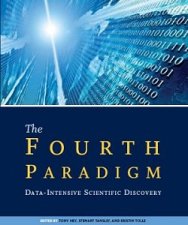
There is some discussion in computer science and other fields of scientific inquiry about the so-called "Fourth Paradigm." Jim Gray, a Microsoft Researcher, coined the term to describe a major shift he saw coming in the way science is done. The first three paradigm shifts, in Dr. Gray's estimation, were the scientific revolutions characterized by experimental, theoretical, and computational methods. The new paradigm shift is towards methods that deal with the immense quantity of data being generated by a combination of inexpensive, prolific sensors, networks, and data storage. Scientists are swimming in data, and the future is about how to make sense of it.
Unfortunately, Dr. Gray died in a boating accident in 2007. However, a tribute to his work has recently been published. The Fourth Paradigm: Data-Intensive Scientific Discovery is a collection of essays on the topic. The promise of this new methodology is staggering. Simply put, it will become possible to solve problems that could not be solved in the past!
-t
Wednesday, December 2, 2009
Facebook Profiles turn out to be Accurate...
It's well known that people lie about themselves when they create on-line profiles for things like dating sites. Turns out, however, that Facebook is different...
In this sense, Facebook is used more as a normal communications tool rather than as a means of self-promotion. How about that?
-t
[W]hen University of Texas researchers began studying Facebook friends, they expected that users also would exaggerate accomplishments and offer an enhanced version of themselves. To their surprise, they discovered that Facebook profiles typically gave an accurate and realistic impression of the user’s real-life personality. (source)
In this sense, Facebook is used more as a normal communications tool rather than as a means of self-promotion. How about that?
-t
Sunday, November 22, 2009
Google Streetview of COTM
Google's "StreetView" of Toronto is now working. You can actually zoom into a pedestrian-eye view of Toronto streets. For example, this is what my church looks like from the Avenue Road side. Remarkable, isn't it? Notice that most of the people as well as license plate numbers have been smudged out for privacy reasons...
View Larger Map
I can tell by various cues that these pictures were taken this summer. Around 12:40 PM according to the bell tower clock! I notice, also, that our Daycare Manager's car is in the parking lot.
-t
View Larger Map
I can tell by various cues that these pictures were taken this summer. Around 12:40 PM according to the bell tower clock! I notice, also, that our Daycare Manager's car is in the parking lot.
-t
Wednesday, October 14, 2009
Does God Hate the Higgs Particle?
The New York Times highlights a new theory as to why it seems to be so hard to get the Large Hadron Collider working. Scientists are seriously discussing whether the future won't allow it:
In other words, maybe we aren't supposed to create a Higgs particle, and the universe will prevent it in increasingly less-probable ways. In other words, the more random the thing is that prevents the Collider to function, the more likely these faults are the future's fault:
He even speculates that this mysterious fate-altering course that prevents the LHC from doing it's work might be God:
That's right, we are looking at the possibility of an anti-miracle, the notion that God will prevent scientists from creating a Higgs particle. How neat is that?
-t
A pair of otherwise distinguished physicists have suggested that the hypothesized Higgs boson, which physicists hope to produce with the collider, might be so abhorrent to nature that its creation would ripple backward through time and stop the collider before it could make one, like a time traveler who goes back in time to kill his grandfather. (source)
In other words, maybe we aren't supposed to create a Higgs particle, and the universe will prevent it in increasingly less-probable ways. In other words, the more random the thing is that prevents the Collider to function, the more likely these faults are the future's fault:
He agreed that skepticism would be in order. After all, most big science projects, including the Hubble Space Telescope, have gone through a period of seeming jinxed. At CERN, the beat goes on: Last weekend the French police arrested a particle physicist who works on one of the collider experiments, on suspicion of conspiracy with a North African wing of Al Queda.
He even speculates that this mysterious fate-altering course that prevents the LHC from doing it's work might be God:
“It must be our prediction that all Higgs producing machines shall have bad luck,” Dr. Nielsen said in an e-mail message. In an unpublished essay, Dr. Nielson said of the theory, “Well, one could even almost say that we have a model for God.” It is their guess, he went on, “that He rather hates Higgs particles, and attempts to avoid them.”
This malign influence from the future, they argue, could explain why the United States Superconducting Supercollider, also designed to find the Higgs, was canceled in 1993 after billions of dollars had already been spent, an event so unlikely that Dr. Nielsen calls it an “anti-miracle.”
That's right, we are looking at the possibility of an anti-miracle, the notion that God will prevent scientists from creating a Higgs particle. How neat is that?
-t
Wednesday, August 5, 2009
Project Updates
Betsy completed the difficult and worrisome trip across the border into Macedonia (FROY) yesterday (Thessaloniki to Ohrid). It was mainly scary because there was so little information available about how to make this trip. We couldn't even get maps for her GPS. When all was said and done she made the trip safely and even met a few fellow travellers who helped with translation and advice. You can read about the train adventure on her travel blog. I was particularly amused by the giant bath towel origami swan that was waiting on her hotel bed.
One of the really neat things she told me when we last spoke a few days ago is that she can now feel the baby moving--no doubt about it. In fact, she was at a hotel pool one day and looked down and could see the little mossling pushing against her belly and making its shape change. This was a big relief for her, and for me. Something about being able see and feel the baby moving is very reassuring!
I'm pretty well recovered from my trip and have been working very hard on two major projects--the HCM/OHC Websites and my tube amplifier. I've been blogging more about the website, but the Tube Amp has seen good progress as well. The only problem is that I keep finding myself missing small but critical parts. The sort of rare and specific stuff that you can't just pick up at Radio Shack. (Ever searched through bins looking for a 47uF 250V Capacitor?) Luckily there are lots of websites on line for buying these kinds of odd parts.
"Didn't your kit come with everything I needed to make a tube amp," you might ask? Sure, it came with everything I needed but not everything I wanted. The initial design is so simple and open to improvement and modification that it is very difficult not to tinker. So at the this point I'm doing all kinds of mods like upgraded transformers, capacitors, and the potentiometer, substantially modifying the AC/DC conversion part of the circuit, and making other changes, as well. For instance, in the original design the inrush current into the four vacuum tubes is uneven, they sort of start glowing in sequence rather than in parallel. This is because, effectively, the circuit trace on the PCB connecting these tubes and providing the electricity to the "heaters" is too thin. Solution--connect the last pair of these pins with the first pair of these pins, thus giving the juice a more even in-rush. Another tip, adding small capacitors between each pair of heater pins to even out juice. But making these mods I just mentioned required some very intricate soldering work. So far all my solders have checked out with an ohms meter--but I do wonder how much time I'm going to have to spend debugging this amp!
I spent a good part of today scanning old photographs from the Order's archives. More of that do. lots of downtime as the scans commence, so I'm reading David McCullough's book 1776 to fill the time.
The Monastery is very quiet. Silence reigns as everyone is on retreat. Quite nice, actually, though I am looking forward to things getting social again.
-t
One of the really neat things she told me when we last spoke a few days ago is that she can now feel the baby moving--no doubt about it. In fact, she was at a hotel pool one day and looked down and could see the little mossling pushing against her belly and making its shape change. This was a big relief for her, and for me. Something about being able see and feel the baby moving is very reassuring!
I'm pretty well recovered from my trip and have been working very hard on two major projects--the HCM/OHC Websites and my tube amplifier. I've been blogging more about the website, but the Tube Amp has seen good progress as well. The only problem is that I keep finding myself missing small but critical parts. The sort of rare and specific stuff that you can't just pick up at Radio Shack. (Ever searched through bins looking for a 47uF 250V Capacitor?) Luckily there are lots of websites on line for buying these kinds of odd parts.
"Didn't your kit come with everything I needed to make a tube amp," you might ask? Sure, it came with everything I needed but not everything I wanted. The initial design is so simple and open to improvement and modification that it is very difficult not to tinker. So at the this point I'm doing all kinds of mods like upgraded transformers, capacitors, and the potentiometer, substantially modifying the AC/DC conversion part of the circuit, and making other changes, as well. For instance, in the original design the inrush current into the four vacuum tubes is uneven, they sort of start glowing in sequence rather than in parallel. This is because, effectively, the circuit trace on the PCB connecting these tubes and providing the electricity to the "heaters" is too thin. Solution--connect the last pair of these pins with the first pair of these pins, thus giving the juice a more even in-rush. Another tip, adding small capacitors between each pair of heater pins to even out juice. But making these mods I just mentioned required some very intricate soldering work. So far all my solders have checked out with an ohms meter--but I do wonder how much time I'm going to have to spend debugging this amp!
I spent a good part of today scanning old photographs from the Order's archives. More of that do. lots of downtime as the scans commence, so I'm reading David McCullough's book 1776 to fill the time.
The Monastery is very quiet. Silence reigns as everyone is on retreat. Quite nice, actually, though I am looking forward to things getting social again.
-t
Monday, August 3, 2009
Dad's Engine
My sister and brother-in-law are visiting my father out it Hawai'i. My dad likes to restore old engines--by which I mean old farm/industrial engines of the type used to pump water or run mills, etc. Here is footage and explanation as he starts up a 1931 Fairbanks-Morse engine which he has restored at attached to a generator. He can run his whole house and the guest house on this engine quite efficiently. The start-up procedure at the minute mark is pretty neat. Basically you just give in a shove and it starts running. There no electricity in this engine whatsoever. It was built to be tough as nails, too, this thing spent many decades rusting the tropical weather before my dad got a hold of it and restored it.
And people wonder where I get my technical bent!
-t
And people wonder where I get my technical bent!
-t
Wednesday, July 29, 2009
Holy Cross's New Website
Okay, the new website for Holy Cross Monastery is up and running. Still a lot to do, but it's ready for it's "shakedown" cruise. If you spot any typos, do let me know...
Still left to do:
Anyway, it's an ambitious project. I'm pleased to be this far with it. Obviously, a lot of content came from the monks (especially the photos from Br. Randy). But as usual I relied on my trusty ORAC running Dreamweaver, Photoshop, and Bridge to compile everything and make it look pretty. Thank God for Photoshop scripts! I saved myself a lot of time by creating batch processes to add drop shadows and borders and such.
For the next stage (CMS-Content Management System) I've set up a testing server on ORAC that basically creates an emulation of an Apache Server with MySQL so that I can set up and test my scripts locally before I go live with them.

I'm particularly proud of some of the detail touches like a new Incense order form that is a fill-able PDF form.
The monks say that virtually everyone that books a retreat or comes considering vocation has spent considerable time looking over the website, so having a decent one is an obvious priority. I was glad things worked out for me to help them with it!
As for the videos. I have two of twelve interviews done. Each is a about an hour. Plenty of content coming together already, but I have more B-Roll to shoot (tomorrow I'll get Edward cooking) and won't be able to film much for the next 10 days anyway as the monks are on "Long Retreat."
You see, now that the Guest House is closed it's time to take a break. 10 days of silence and prayer and meditation. We kicked it off with a party, of course (read Bede's description if you're curious), and now things will get deep in a different way.
My project for Long Retreat (since I can't interview any of the monks, anyway) is to build my amplifier. I've got almost all the parts (still need the wood and brass to build an enclosure) and have started assembling the circuit board. I'm substantially modifying the K-12G design using VoltSecond and Bruce Heran's recommendations. I find myself really wishing I had a good bench Oscilloscope with an audio analysis module. Both VoltSecond and Bruce did a lot of trial and error and testing to perfect their builds, and I'm just standing on their shoulders.
Still, the smell of solder is pleases me!
-t
Still left to do:
- Redo the Order's Website (as opposed to the Monastery's website that I just did!)
- Implement an .htaccess to execute server-side 301 redirects (though I did put HTML-based redirects in temporarily)
- Add a search engine
- Add a shopping cart front/back end to process online book store orders
- Add a Script to auto-generate RSS feeds
- Migrate the site over to a CMS back-end
- Add a social-networking site for Associates (possibly Jomsocial?)
- Add videos highlighting aspects of HCM life including worship, community life, vocations, hospitality ministry, outreach, history of the order, etc.
- Train the monks to maintain the site
- Possibly add dynamically-generated Ordo?
Anyway, it's an ambitious project. I'm pleased to be this far with it. Obviously, a lot of content came from the monks (especially the photos from Br. Randy). But as usual I relied on my trusty ORAC running Dreamweaver, Photoshop, and Bridge to compile everything and make it look pretty. Thank God for Photoshop scripts! I saved myself a lot of time by creating batch processes to add drop shadows and borders and such.
For the next stage (CMS-Content Management System) I've set up a testing server on ORAC that basically creates an emulation of an Apache Server with MySQL so that I can set up and test my scripts locally before I go live with them.
I'm particularly proud of some of the detail touches like a new Incense order form that is a fill-able PDF form.
The monks say that virtually everyone that books a retreat or comes considering vocation has spent considerable time looking over the website, so having a decent one is an obvious priority. I was glad things worked out for me to help them with it!
As for the videos. I have two of twelve interviews done. Each is a about an hour. Plenty of content coming together already, but I have more B-Roll to shoot (tomorrow I'll get Edward cooking) and won't be able to film much for the next 10 days anyway as the monks are on "Long Retreat."
You see, now that the Guest House is closed it's time to take a break. 10 days of silence and prayer and meditation. We kicked it off with a party, of course (read Bede's description if you're curious), and now things will get deep in a different way.
My project for Long Retreat (since I can't interview any of the monks, anyway) is to build my amplifier. I've got almost all the parts (still need the wood and brass to build an enclosure) and have started assembling the circuit board. I'm substantially modifying the K-12G design using VoltSecond and Bruce Heran's recommendations. I find myself really wishing I had a good bench Oscilloscope with an audio analysis module. Both VoltSecond and Bruce did a lot of trial and error and testing to perfect their builds, and I'm just standing on their shoulders.
Still, the smell of solder is pleases me!
-t
Subscribe to:
Posts (Atom)