Showing posts with label healthcare. Show all posts

Thursday, September 16, 2010

Ode to Pseudophedrine


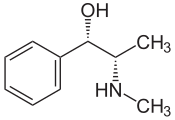
O Pseudophedrine, for a thousand dry mouths to praise your excellent character, your superb effectiveness, your quick action. Thou clever diastereomer of ephedrine, you indirectly affect the adrenergic receptor system to make my nose dry and snot-free. Indeed, thy elixir-of-dryness powers prevent fluid from leaving all my nasal blood vessels to fill inflamed tissue.

My heart doth quicken in response to thee, O Pseudophedrine, whether thou commest under the name of Sudafed, Actifed, Contac, or partnered with other muses of cold relief such as your coy friends guaifenesin, dextromethorphan and acetaminophen.

But thou art a fickle mistress of the drippy nose, and art known to inhabit dens of ill repute to be transformed into thy wicked cousin, Methamphetamine. Be true to me, O greatest phenethylamine, my nose doth drip without thee.

-t

Friday, June 18, 2010

Hand Washing

When you work in a hospital, as I once did, you learn some useful things. For example, before I was cleared to see patients (as a chaplain) I first had to learn proper hand washing technique. A nurse explained to a group of us that hand washing is the number one method for clinicians to avoid spreading disease from patient-to-patient. Even when you haven't actually touched the patient, merely by being in the room you have come into contact with a contaminant inadvertently. Thus, washing hands between patients is absolutely critical. Then we were shown a short film on how to properly wash your hands. I'll give you the highlights:
  1. Turn on the water, adjust the temperature to be comfortably warm
  2. Wet your hands
  3. Out of the water stream, soap up your hands and scrub vigorously at least to half way up your forearm for at least 20 seconds
  4. Rinse your hands in the water
  5. Dry your hands with a paper towel
  6. Use the paper towel to turn off the water tap... Do not touch the handles

This simple procedure saves thousands a day. Lots and lots of studies have confirmed just how important hand washing is to controlling infection in a clinical setting. And yet mistakes are made. I remember reading a study about how various clinicians were observed to see how often they remembered to wash hands, and Chaplains scored better than doctors! (And so did nurses.)

I'm thinking of this because we took Henry to his six-month well baby doctor visit yesterday. His initial exam was performed by a medical student and both Betsy and I observed that she did not wash her hands correctly before putting hands on the baby. To be fair, it's possible that she washed her hands before entering the room (although, that would require using the door knob between sink and infant). All we saw a brief rinsing of her hands with water, drying with a paper towel, and then turning off the sink with her bare hand. I thought about saying something, but didn't want to be a pushy, germ-obsessed parent. Nor did I want to embarrass her with her Supervisor (who wasn't in the room for the exam). She must be very new to clinical pediatrics, because she had never seen a cloth diaper before. But I now I regret not saying anything. She was there to learn, after all.

-t

Tuesday, December 22, 2009

William Henry Moss


Here's my little guy, William Henry Moss. We'll call him "Henry." He's a cuttie pie. Unfortunately, he's developed some Jaundice (extremely common) and needs to spend another night at the Hospital. Betsy is ready to come home, but will stay with him, naturally. Jaundice, incidentally, is when the level of a bi-product of the normal breakdown of red blood cells called Bilirubin gets too high in the blood. Normally bilirubin is filtered out by the liver and exits the body through the intestinal tract. But newborns have both high turnover of red blood cells and newly-developing livers, so often the Bilirubin levels get too high. Most of the time this will resolve itself naturally once the mother's milk comes in (exposure to sunlight also helps), but some Pediatricians (such as the one assigned to us by the hospital) are more aggressive about treating this than others. If we hadn't been in the hospital in the first place it probably wouldn't be an issue. But once we were transfered to hospital care from the midwife, we kind of lost control of that. We had never even met the MD who ordered the treatment until the nurse twice requested the pediatrician visit us. Interesting how our nurse let us know that our case was borderline and that it would be reasonable for us to go home and yet never actually directly questioned the doctor's judgment. Hmm. But when your nurse tells you to get a second opinion you know something is up. Anyway, the momentum was against us and the pediatrician was quite dismissive and rude and we're exhausted, so.... Henry is going get treated for Jaundice. (Oh, and did I mention that the pediatrician in question never even examined Henry? All she cared about was one number on the chart (Bilirubin level).)

Fortunately, the treatment is non-invasive. They put him in an incubator to keep him both naked and warm, and shine some special lights on him overnight. He can still feed as normal--but I anticipate a difficult night for our little guy.

Otherwise... things are definitely swinging back toward equilibrium. Family is coming into town today and that will be helpful. I'm home for a few hours just to get some stuff for Betsy and take a shower. Might catch a nap, too.

-t

Monday, December 21, 2009

Birth Story Pre-Posting

Betsy gave birth to our son, William Henry Moss (we'll call him "Henry") on Saturday afternoon at 1:34 PM. He was 8lbs 6oz. of joy right from the get go. He was born at home, which was an awesome and beautiful experience, but then Betsy developed a rare and unforeseeable complication that required her to go into the hospital for surgery. The surgery was successful and hopefully she will be able to come home tomorrow (Tuesday). I've been with her and Henry in the hospital, but I'm just coming home to take a shower, nap and post this update.

Big thanks to everyone for their prayers and concern. It means a lot to us that so many people have been apart of this time in our lives. I'll be able to share more details and lessons learned and other blog-worthy tid-bits after we've had a chance to get our bearings again. Right now I'm just gonna go down for a nap!

-t

Saturday, October 17, 2009

Prison Hospice

Given that 1 out of every 32 is under "Correctional Supervision" (that's 6.7 Million people), it's not surprising that there is a large geriatric population in jail. More than 3,000 inmates die from natural causes in prison each year, so many prisons are starting to develop hospice programmes staffed with inmate volunteers.

As courts have handed down longer sentences and tightened parole, about 75 prisons have started hospice programs, half of them using inmate volunteers, according to the National Hospice and Palliative Care Organization. Susan Atkins, a follower of Charles Manson, died last month in hospice at the Central California Women’s Facility at Chowchilla after being denied compassionate release.

Joan Smith, deputy superintendent of health services at the Coxsackie prison, said the hospice program here initially met with resistance from prison guards. “They were very resentful about people in prison for horrendous crimes getting better medical care than their families,” including round-the-clock companionship in their final days, Ms. Smith said. (source)


Not surprisingly, the experience has become transformative for the volunteers in a way that the rest of their prison experience has not been.
Benny Lee, 38, has spent half his life in prison for manslaughter, and for most of that time, he said, “the only thing I regretted was getting caught.” Four months ago he began as a hospice volunteer, feeling he needed a change. “I’m trying to offer some payback,” he said. (source)


Recently I ran into a friend I hadn't seen in many years. Turns out, several years ago he spent 18 months in jail for DUI and Cocaine possession. He says that it was the best thing that ever happened to him--really turned his life around. He told me that when you are sent to prison you really have a choice--you can waste the time passing the hours or you can use it to improve yourself mentally, spiritually, or physically. He took advantage of the time to change himself and was glad for it. He also said that prison is like anywhere else, there are good people and bad people and you can survive if you make wise choices.

This situation of the Prison Hospice programmes reminds me of the cemetery in New York where they bury the abandoned dead. If they can't find a family to claim remains, they are eventually buried in a cemetery which is maintained my prisoners. Being on the cemetery detail is considered a privilege, as the inmates take the care of the cemetery very seriously.

-t

Wednesday, October 7, 2009

Tay's Tips for Pregnancy #23: Buy a Cheap Stethoscope...


Early on in Betsy's pregnancy I would try to listen to our baby using a cheap ($20) stethoscope I have at home. It's a chinese copy of a Rappaport-Sprague--the sort with the diaphragm on one side and a bell on the other. I couldn't hear anything. On our first trip to the OB, they could easily pick it up with a Doppler Fetoscope. On our first trip to the Midwife, she was able to detect the heartbeat with a combination of an Allen Type Fetal Stethoscope and a finely tuned diagnostic ear. I thought I might have barely been able to hear our little guy's heart, but couldn't be certain.

On our last trip (Betsy at 29 weeks) I could faintly hear the baby's heart beat using the midwife's Allen Stethoscope, but Betsy couldn't. Now, at this point I had given up trying to hear the heartbeat with my chinese knock-off general-practice stethoscope. I figured, sure, you can hear it with a $150 specialized instrument placed in the right position by an expert, but what chance do I have at home.

So then this evening, on a whim, I took the stethoscope out of the drawer and put the bell-side to Betsy's belly in approximately the location where the midwife had (thus assuming that our little guy was in more or less the same position) . "Thump, thump, thump..." There he was! I didn't even believe it at first, so I listened to Betsy's heart and noted that it was going at around 60 beats a minute. But when I timed the belly-thumping it was a steady 125 BPM! I passed the headset to Betsy and she could hear him, too! How cool is that?

Actually, Betsy is a little underwhelmed. Our son has been busy kicking and rearranging her insides all day, so the novelty of "he's really in there" has worn off. But for me, this is really amazing.

Now, I'm aware that there are electronic gadgets on the market that promise to make it possible to hear the heartbeat and even record it. But there is something about an old-fashioned acoustic stethoscope that feels much more visceral and real. Trust me, guys, buy a cheap stethoscope and give a listen around week 30! I'm looking at you, Bob!

-t

Thursday, September 3, 2009

Study: Home Births as Safe as Hospital Births

A new study done in British Columbia comparing 2,889 home births attended by licensed midwives with 4,752 planned hospital births also attended by midwives and 5,331 hospital births attended by a physician found that, for low-risk pregnancies, home birth is just as safe as hospital birth.
Planned home birth attended by a registered midwife was associated with very low and comparable rates of perinatal death and reduced rates of obstetric interventions and other adverse perinatal outcomes compared with planned hospital birth attended by a midwife or physician. (source)

The study only looked at low risk pregnancies, but found that the rate of infant mortality was slightly higher for hospital births (0.35 per 1000 for home births vs. 0.57 for hospital births with midwife vs. 0.64 for hospital births with an MD).

The use of interventions during birth was much lower for the home-birth group:
  • 0.32 times less likely to receive electronic fetal monitoring
  • 0.41 times less likely to have an assisted vaginal delivery
  • 0.41 times less likely to suffer third- or fourth-degree perineal tears
  • 0.62 times less likely to have postpartum hemorrhage
Interestingly, even the women that wanted a home birth but ended up in the hospital still have lower instances of intervention.

Also significant, babies born at home were 0.23 times less likely to require either resuscitation or oxygen after 24 hours and 0.45 times less likely to have aspirate meconium.

Now, the point of this study is not to say, necessarily, that women should give birth at home, but rather to assess the risk of that choice. The researchers wanted to know, "is it safe to give birth at home under a midwife's care," and the answer seems to be "yes." This has as much to do with the screening midwives to on candidates for home birth as with the inherent safety of one environment over the other.

It's very important to recognize the self-selecting bias of this study. Inherently, women choosing to have a home birth are doing so because they are healthy and show no risk factors. But this study shows that this choice does not increase the risk to baby or mother. It's one of the largest such studies done to date, and it's a real landmark.

While it might seem like having all the resources of a hospital would reduce risk, it is also true that certain aspects of hospital birthing also increase the risk in an off-setting way. For example, the higher-stress on the mother, the tendency of doctors to induce labour unnecessarily, and the disturbing trend of medically-unjustified C-Sections (Current Canadian rate of C-Sections is 28% vs. about 31% for U.S. and about 15% for the rest of the industrialized world).

There are a lot of reasons why the rate of C-Sections is so high in the U.S. and Canada, and lots of Doctors and others are worried about it. Many of these seem to be C-Sections-on-Demand--requested by the mother for reasons of convenience, the perceptional that a surgical birth is "easier" than vaginal delivery, etc. It's a major surgery that has the potential to cause a lot of complications. Indeed, it raises the risk for future pregnancies substantially.

The infant mortality rate for the U.S. is terrible: 6.3 per 1000 ranking them 33rd in the world. Canada is a little better: 4.8 per 1000 ranking us 23rd. But this is still far behind countries like Cuba (5.1 per 1000), Slovenia (4.8 per 1000), the Czech Republic (3.8), and world-leader Iceland (2.9 per 1000) source. That's right, a baby is twice as likely to survive in Iceland as the U.S. (FYI, the C-section rate in Iceland is rising, too, from 13.1% in 1987 to 17.9% in 2006. source) I don't know of a study has conclusively linked c-section complications with the higher-than-it-ought-to-be mortality rate in the U.S., but it's all part of the same puzzle.

Here's an excerpt from an article that appeared in the Vancouver Sun recently:
[Dr.] Christilaw says the only thing preventing Canada from seeing "horrific" complication rates from C-sections is the fact women are not having as many babies as they once did.

"A C-section can be a life-saving manoeuvre for a mother or baby. Nobody is saying differently," she says. "What we're trying to say to people is, a C-section is not a benign thing. If you need one, that's different. But you should not be doing this unless you absolutely have to."

C-sections are frequently the end result of a cascade of interventions that often starts with inductions.

Tens of thousands of women in Canada have their labours artificially induced every year, often via intravenous infusion of artificial oxytocin. Oxytocin is naturally produced by the human body. It's what creates contractions in labour. Today in Canada, one in five women who gives birth in hospital is induced.

What doctors fear are stillbirths. But alarmed by the rising rates of inductions, the Society of Obstetricians and Gynecologists of Canada recently urged doctors not to consider an induction until a woman is at least one week past her due date.

Claudia Villeneuve says that women are getting induced "if they're two, three, four days overdue."

"Inductions are rampant," says Villeneuve, president of the International Cesarean Awareness Network of Canada. "You have a perfectly normal mom who comes in with a perfectly normal baby, and now you put these powerful drugs into her system to force labour to start."

The "humane" thing is to offer an epidural, she says. With an epidural, a woman can't feel pain in the lower half of her body. But epidurals slow labour, sometimes so much that labour stops. "Now you have to get this baby out," Villeneuve says. Two-thirds of first-time C-sections are done for "failure to progress."

[Dr. Michael] Klein says epidurals are too often given before active labour is established.

"The majority of women today get their epidurals in the parking lot."

So the cascade continues: epidurals increase the use of electronic fetal monitoring, where electrodes are strapped to the woman's belly to monitor her baby's heart rate.

"It's hard to change positions when you have a fetal monitor on, and an epidural with its little things taped to your back, and an IV in your arm," [Professor of Perinatal Nursing Ellen] Hodnett says. "Why would labour progress normally, if you're stuck in a labour bed with all this machinery on you?"

What's more, EFM is an imperfect technology. It detects subtle changes that can't be picked up by just listening to the baby's heartbeat after contractions, "and those subtle changes are often false positives," Klein says. "In other words, the fetus is OK, you just think it isn't OK." (source)


There are lots of other factors behind the high C-section rate, of course, including the fear of malpractice suits. I'm just trying to make the point that the fewer interventions on mother and baby, the better off both will be. This goes against some of the prevailing wisdom that more medical intervention means lower risk.

A wiser answer to this question--"which is safer"--may simply be, "It depends." If baby and mom are happy and healthy and want a home delivery, there seems to be no medical reason to prevent it and some to recommend it. If, on the other hand, complications seem likely, than you may be better off in a hospital.

-t
Another Study about how Drinking can be Good for You

A new study just published in the American Journal of Geriatric Psychiatry analyzed the results of 15 previous studies to demonstrate the people over 60 who consume between 1 and 28 alcoholic drinks per week significantly reduce the risk of Alzheimer's and other dementias. For male drinkers the risk was reduced by 45 percent. Women saw their risk reduced by 27 percent.

Causation is difficult to determine, but probably has to do with how alcohol increases good cholesterol, increases blood flow to the brain, and decreases blood coagulation.

-t

Sunday, August 9, 2009

Red Heads and Pain

Did you know that people with (naturally) red hair require higher doses of anesthesia and other pain killers to have the same effect as people with blond or black hair? Apparently the same gene mutation that causes red hair also effects the performance of various drugs:

The MC1R gene belongs to a family of receptors that include pain receptors in the brain, and as a result, a mutation in the gene appears to influence the body’s sensitivity to pain. A 2004 study showed that redheads require, on average, about 20 percent more general anesthesia than people with dark hair or blond coloring. And in 2005, researchers found that redheads are more resistant to the effects of local anesthesia, such as the numbing drugs used by dentists. (NY Times)

As a result, Red Heads have a statistical tendency to avoid dentistry.

As an aside, when I was at the hospital I noted that pain management was often a weak spot in medical care. Doctors are often nervous about prescribing narcotic pain killers, even in a hospital setting. God help you if someone writes "drug seeking" on your chart! I remember one doctor who became suspicious of a patient simply because that patient asked for a specific drug with a specific dosage, never mind that this person has a painful chronic condition and had been through hospitalizations enough to know what worked to control his pain, in this case knowledge worked against him. There have been a lot of studies that have concluded that many (by no means all) doctors under-prescribe to treat pain, probably because there are no objective metrics clinically available to quantify pain. As a result, they end up asking that "On a scale of 1 to 10" question, which honestly seems lame to me. People have no reference point. Better to ask, "Do you think you are in more pain today or less?"

Honestly, I was also very suspicious of the class and racial bias that may exist in pain management. I knew a black woman with Charcot Marie-Tooth that has some real horror stories of what it was like to present herself at an emergency room asking for help with pain from her condition. She is currently working on a timely documentary about how race affects medical care in this country.

-t

Thursday, May 28, 2009

New Ways to Give Yourself Cancer

Check this out, R.J. Reynolds is test marketing new tobacco products that dissolve in your mouth. No smoke. No spitting. Camel "Orbs" are bead-like droplets of flavored nicotine. "Strips" are like those breath-freshening strips and give a heavy dose of nicotine (much higher than a cigarette) very quickly. "Sticks" are shaped like toothpicks and stretch the high out.

Critics say these candy-like delivery methods are an attempt to appeal to kids, but really it's just a creative solution to the problems of "smoking." Time will tell whether it works, but given the success of tea-bag like "Snus." Will this stuff kill you? Of course it will! Will it make it "easier" for people to get a nicotine high without the problems of secondhand smoking? Of course it will! Who dreams these things up?

-t

Wednesday, April 29, 2009

Flu

Well, since the World Health Organization has raised the Pandemic Alert Level to 5 (out of a possible 6), the Diocese of Toronto has automatically implemented it's Influenza Response Plan (actually, the plan was activated at level 4). That includes various protocols and policies to be followed around things like the common cup and pastoral visiting. Thanks to SARS, the Diocese is relatively well prepared for this kind of thing.

Bishop Johnson sent a pastoral letter out by e-mail essentially saying, "prepare, but don't panic."

Kind of scary, actually. No one likes to pull the red binder off the shelf...

-t

Sunday, February 8, 2009

Saving Lives with IV Vodka

Interesting therapy:

Doctors save man with vodka drip


Australian doctors have kept an Italian tourist alive by feeding him vodka through a drip for three days, medical staff in Queensland say.

The 24-year-old man, who had swallowed a poison in an apparent suicide attempt, was treated while in a coma.

Doctors set up the drip after running out of medicinal alcohol, used as an antidote to the poison.

Medical staff said the patient had made a full recovery, and the hangover had worn off by the time he woke up.

He had been taken to hospital in the northern Queensland town of Mackay after swallowing ethylene glycol - a poison contained in anti-freeze.

"The patient was drip-fed about three standard drinks an hour for three days in the intensive care unit," Dr Todd Fraser said in a statement.

"Fortunately for him he was in a medically induced coma for a good portion of that. By the time he woke up I think his hangover would have well and truly gone."

He spent 20 days in hospital before being discharged. (source)


-t

Friday, January 30, 2009

The Myth of Teen Promiscuity

There have been several articles in the media lately about the "Myth of Rampant Teen Promiscuity." Basically, sociologists have determined that teens today are having less sex and are postponing the onset of sex compared to teens 10 or 20 years ago. the notion that kids today are more sexually active than their forebears is simply false. While it is true that teen pregnancy is on the rise, that may have more do with abstinence-only sex ed programmes than loosened mores. This goes against prevailing wisdom, and that discontinuity between popular myth and measured reality is, itself, a worthy topic to explore.

In her NYTimes blog Judith Warner argues that adults want to believe in teen promiscuity (and other forms of "moral panic") because it masks more complex problems. This is familiar territory, think of the alarms raised over the "Overscheduled Child," the "boys are falling behind girls in school" phenomenon, or the "Overmedicated Child."
After all, moral panics – particularly those concerning children – always serve some hidden purpose. “Modern ideas about the innocent child have long been projections of adult needs and frustrations,” Gary Cross, a professor of modern history at Penn State University, writes in his 2004 book, “The Cute and the Cool: Wondrous Innocence and Modern American Children’s Culture.” “In the final analysis, modern innocence has let adults evade the consequences of their own contradictory lives.”

All the examples of child myth-making that I’ve mentioned here have to do, at base, with the perceived corruption of childhood, the loss of some kind of “natural” innocence. When they depart from kernels of reality to rise to the level of myth, they are, I believe, largely projections that enable adults to evade things. Specifically, the overblown focus on messed-up kids affords parents the possibility of avoiding looking inward and taking responsibility for the highly complex problems of everyday life. (source)


The fact is that the best way to delay the onset of sexual activity in children is to be engaged in good solid parenting. "Teenagers with more parental supervision, who come from two-parent households and who are doing well in school are more likely to delay sex until their late teens or beyond. 'For teens, sex requires time and lack of supervision,' Dr. Kefalas said. 'What’s really important for us to pay attention to, as researchers and as parents, are the characteristics of the kids who become pregnant and those who get sexually transmitted diseases'" (source). Usually, it is argued, kids who engage in risky behaviour (sexual or otherwise) are acting out because of underlying problems such as low self-esteem, isolation/loneliness, and poor emotional intimacy with parents. Blaming traditional sex education as being too permissive or popular culture is not a sufficient response to the very real problems that some kids have.

-t

Thursday, January 29, 2009

Eating Dirt

Eating dirt is good for you. Don't believe me? Read the New York Times:

Indeed, accumulating evidence strongly suggests that eating dirt is good for you.

In studies of what is called the hygiene hypothesis, researchers are concluding that organisms like the millions of bacteria, viruses and especially worms that enter the body along with “dirt” spur the development of a healthy immune system. Several continuing studies suggest that worms may help to redirect an immune system that has gone awry and resulted in autoimmune disorders, allergies and asthma.

These studies, along with epidemiological observations, seem to explain why immune system disorders like multiple sclerosis, Type 1 diabetes, inflammatory bowel disease, asthma and allergies have risen significantly in the United States and other developed countries. (source)


Dirt, it does the body good!

-t

Wednesday, January 21, 2009

Lidocaine

An odd day that started normally enough with the Contemplative Eucharist here at COTM. I had time afterwards to clean up and answer some e-mails and blog a bit before rushing off to a Dentist appointment.

This was a follow up from a week or so ago. They wanted me back to fill some small cavities and clean up some old bonding work. I really like Dr. Brown and his office. No waiting, even though they were busy. Friendly staff. Good banter. Modern, pristine office. Efficient and high-quality work. And, perhaps most importantly for dentists, superb pain management.

After rubbing a topical anaesthetic of some sort on my gums they began injecting something (perhaps Lidocaine) into the gums to deaden the nerves before drilling. Here is where things got interesting. The (attractive female) Dental Assistant began massaging my left earlobe. "I'm just going to distract you from what what Dr. Brown is doing," she explained. I immediately understood, I've seen similar techniques used with children in the hospital. So I decided to relax by entering into a mode of being attentive to my body. Having meditating a few hours helped.

I noticed several things going on at once. First, the earlobe trick works on several levels. On a purely neurological level, it's true that giving my system more than one novel sensory input at a time caused my attentions to be divided and lessened my perception of the injections. On a psychological level, the earlobe massage was also both novel and soothing, so it worked that way as well. There was a moment when I was thinking, "Really? You're going to do that while he sticks needles in my gums? Hmm. Okay..." Anyway, I didn't feel a thing.

Dr. Brown drilled out the cavities and then one of his people went to work filling in the holes and also cleaning up the bonding work. When they were done I was pleasantly surprised by the difference they made. The bonding is imperceivable. In fact, my teeth look whiter than before. Well worth putting up with a little earlobe massage.

After the dentist it was off to lunch with a parishioner. Thai food at a place on Yonge: Mint. I enjoyed a Thai Ice Tea thankful that the Lidocaine had worn off.

After that I hit the gym for a sold hour of weights and cardio. Interesting how even just a few gym sessions makes a perceptible difference in how I feel.

Now I'm just finishing up my day at church. And a good day it was!

-t

Thursday, January 15, 2009

New Year, New Body?

So I've started going back to the gym this week. It was a good workout yesterday: upper-body resistance training and then half-an-hour of cardio. I just have to keep my motivation up to keep going. I find music helps--especially rap! I think I need to join a class of some sort. I'm strongly considering Ju Jitsu--that would be a very appropriate choice for a ninja priest. I used to take martial training quite seriously and was pretty good at Karate (Ishin Ryu was my style). It's nice have areas of life where one can be unapologetically aggressive!

I also went to the Dentist for the first time in many years. I know, I know, I'm a bad person for not going sooner. But who wants to go to the Dentist? They said I didn't have as much tartar as they expected (so I guess I'm doing a descent job brushing). And my gums were in pretty good shape, too. They found one small cavity they are going to fill Monday.

The big issue, however, is that I still have three missing teeth leftover from dental work I had done way back in High School. At the time we didn't have money for implants and didn't like the idea of destroying healthy teeth to put in a conventional bridge. So instead we opted for a "Maryland" Bridge. But of the four bridges only one has survived to the present day. I gave up having the others re-glued every few months.

So I still have these gaps. The ideal solution would be implants--but the cost is astronomical. We'd be looking at $15,000 when all is said and done. The other option is a conventional bridge (still expensive) and the third option would be some kind of denture appliance. These are a hassle, but would keep the teeth around the gaps from shifting in. Realistically, we probably won't be able to afford to have my mouth fixed properly until Betsy graduates and gets a job! Sigh.

But I suppose the good news is that I really like the dentist we found, Dr. Brown. He's a nice guy and his office is very thought out and polished. Everyone, including the hygienist, was kind and competent. Nor did I feel like I was entering a confessional booth, as sometimes happens in shame-based dental care offices.

The contacts are still working out for me, as well. After about a week with a trial pair I think I'm ready to make the change permanent. I'm getting better about sticking them into my eyes, though I'll be glad when I've mastered the technique completely.

I wouldn't call any of this a New Year's Resolution--but it is true that the New Year does make a convenient time to make changes like these. I just hope I can maintain motivation around these convictions!

-t

Thursday, January 8, 2009

Three, two, one.... Contact

So I've decided to take the plunge and try contact lenses. In fact, that's what I'm wearing right now. I got fitted with a trial pair yesterday. Today I'm allowed to wear them for 2 hours. Tomorrow four. After that, I'm golden.

Hardest part, definitely learning to put them in. But I'm getting faster each time. Yesterday the tech made me put them in a take them out several times to make sure I was getting the hang of it. How do they feel? Fine. I barely notice they are there, in fact. Interestingly, my vision is better with contacts than it was with glasses (20/15!) although the RX is the same.

Why contacts? Why not?

-t

Tuesday, January 6, 2009

What made me excited about today.

Finished my column for the Anglican. Looks good. Glad to get that out the door and on-time.

Lately the energy has seemed low around COTM. I've been blaming the Christmas-rush, but actually I'm not sure what the reason, but I was really pleased today to feel myself getting very excited about some new stuff we are planning.

For instance, our confirmation prep programme is looking awesome! I'm really excited about what we've come up with. We are recycling some stuff from Heather McCance and then adding a bunch of stuff that makes it our own. It's going to be great!

We came up with some other ideas in our staff meeting that are really wonderful and organic and I think truly responsive to where people are. More about that later.

Now It's a Principle Feast day (Epiphany) so I managed to get myself invited to celebrate Mass at Trinity. I love celebrating seminary Eucharists!

BTW, I had an eye exam today. My Intraocular Pressure was on the high side, so I've got a referral to another doctor to make sure I'm not at risk for developing early-onset glaucoma. Just another reminder that I'm past the age where I can take my health for granted.

-t

Wednesday, November 19, 2008

Vicar Has Unfortunate Potato Accident

From The Telegraph:

Vicar went to hospital with potato stuck in bottom


A vicar attended hospital with a potato stuck up his bottom - and claimed it got there after he fell on to the vegetable while naked. The clergyman, in his 50s, told nurses he had been hanging curtains when he fell backwards on to his kitchen table.

He happened to be nude at the time of the mishap, said the vicar, who insisted he had not been playing a sex game.

The vicar had to undergo a delicate operation to extract the vegetable, one of a range of odd items medics in

Sheffield have had to remove from people's backsides or genitals.

Others include a can of deodorant, a cucumber, a Russian doll – and a carnation.

Speaking of the vicar, A & E nurse Trudi Watson, of Sheffield's Northern General Hospital, said: "He explained to me, quite sincerely, he had been hanging curtains naked in the kitchen when he fell backwards on to the kitchen table and on to a potato.

"But it's not for me to question his story. He had to undergo surgery to have it removed."

She advised anyone tempted to use such objects in sex games to think again.

"It can be very dangerous and potentially life-threatening," she said.

"Surgery can lead to infection, nasty scarring, and it could possibly end up with the person having to use a colostomy bag as a result."

A hospital trust spokeswoman in Sheffield said: "Like all busy hospitals we do see some unusual accidents.

"But our staff deal with them in a discreet, professional and kind way." (source)


I love how the hospital admin is claiming that they provided this poor guy with "discreet, professional" care! Sure doesn't seem that way from the article...

-t

Tuesday, November 18, 2008

Apology Law

A new law proposed in Ontario makes is possible for doctors to apologize for mistakes without incurring liability. Often when a doctor or other medical care worker makes a critical error they are advised not to admit a mistake because it could open them (and their hospital/clinic) open to being sued. This law offers the chance to say "I'm sorry--I made a mistake" without that apology being taken an admission of guilt for the purposes of a law suit.

My own experience in the church and the health care industry is that many times people really will be satisfied with an apology. Many states that have adopted this kind of legislation have seen malpractice lawsuits halved as a consequence.

I remember a lecture by a clergy sexual abuse expert in which she told us that victims usually sue the church only after they fail to find resolution via a simple but honest apology. Therefore, she always urged Bishops to ignore the advice of counsel and offer apology when the situation warrants. In these cases, the victims are always more interested in seeing signs of repentance and reformation than simply getting money for damages. It's really not about the money--but money has been given the power to express things that are taboo to say otherwise. IMHO, this is a huge mistake. If Christians can't say their sorry and amend their ways, then we are in serious trouble.

So I'm heartened by the law here in Ontario which ought to free Doctors to be more honest about mistakes that are made.

-t